Most finance teams still rely on manual spreadsheets, isolated dashboards, and static models that struggle to adapt to fast-changing markets.
CFOs spend days consolidating data before they can even begin to make decisions, and forecasts are often disconnected from actual transactional systems.
The result is a process that’s time-consuming, fragile, and usually outdated by the time it’s approved — exactly the gap that AI financial forecasting is designed to close.
A More Practical Approach to Forecasting
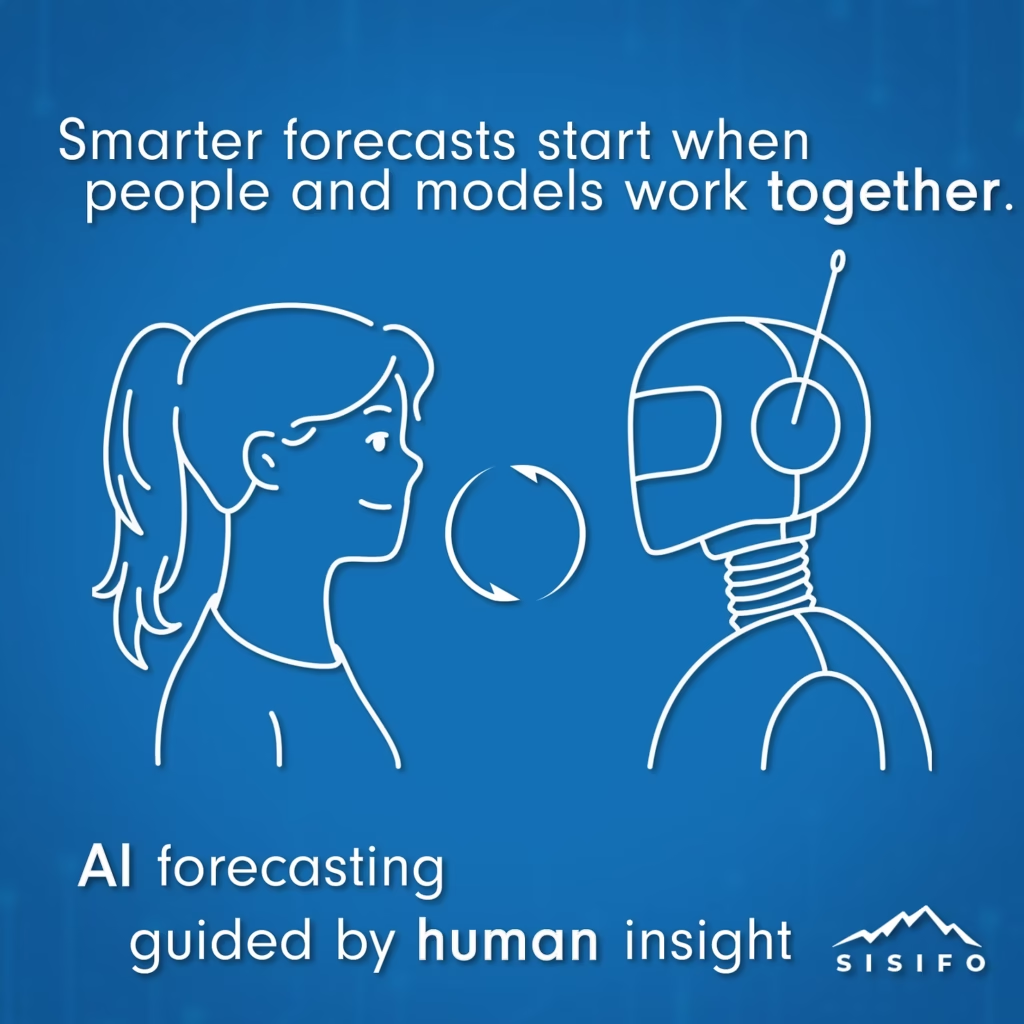
AI models can help automate much of the repetitive work in forecasting, but they’re not meant to replace human judgment.
The most effective approach combines automation with expert oversight, allowing finance teams to focus on analysis and strategy instead of data wrangling.
The goal isn’t to predict the future perfectly, but to build a forecasting process that’s fast, adaptive, and explainable.
The Technical Approach
1. Using Model Context Protocols (MCPs)
Modern data infrastructure allows forecasting models to run directly within the organization’s data warehouse — the same single source of truth that keeps every other report consistent.
Model Context Protocols (MCPs) make this possible, coordinating ARIMA and SARIMA forecasting without relying on external tools or risking data leakage.
This setup enables:
- Seamless integration with existing data environments
- Automated updates aligned with daily data refreshes
- Secure, explainable model management
2. ARIMA and SARIMA for Sales Forecasting
AutoRegressive Integrated Moving Average (ARIMA) and Seasonal ARIMA (SARIMA) models are widely used for time-series forecasting. They help identify patterns in historical data and estimate how future trends may behave.
Forecast quality still depends on clean inputs, which is why teams pair these models with a data quality scoring framework before trusting the output. With reliable data, teams can:
- Detect seasonality and growth trends across products or regions
- Run scenario-based forecasts by adjusting parameters like demand growth or external factors
- Generate rolling predictions at daily, weekly, or monthly intervals
3. From Forecast to Budget: Automated Operating Plans (AOPs)
Once forecasts are generated, they can be directly converted into Automated Operating Plans (AOPs). These dynamic budgets update automatically as new data becomes available and can be adjusted manually by finance leaders when needed.
This approach eliminates manual spreadsheet recalculations and ensures that budgets stay aligned with real-world performance.
Why This Approach Works
The shift is bigger than one team’s workflow. Gartner research on finance AI roadmaps points to the same pattern: CFOs get the most value when they pilot a small number of well-scoped use cases — like AI financial forecasting — rather than trying to automate everything at once.
- Transparent: Built on proven statistical models that are easy to interpret
- Adaptable: Adjusts as new information becomes available
- Integrated: Connects directly to financial, sales, and inventory data
- Empowering: Keeps control in the hands of finance professionals, not algorithms
Results in Practice
Organizations using this kind of setup gain:
- Sales forecasts that refresh automatically with live data
- Budgeting cycles reduced from weeks to minutes
- Better alignment between predictive analytics and business strategy
- Financial visibility that evolves as the business grows
Getting Started with AI Financial Forecasting
Finance teams don’t need to rebuild their entire planning stack to benefit from AI financial forecasting. A focused first step usually works better than a full platform migration.
- Pick one recurring forecast — sales, cash flow, or headcount — as the pilot
- Connect it to live source data instead of a manually updated spreadsheet
- Run the AI-generated forecast alongside the existing process for one full cycle to validate accuracy
- Expand to additional forecasts only once finance leadership trusts the numbers
This staged rollout keeps finance in control while still capturing most of the speed and consistency that AI financial forecasting offers.
Conclusion
AI forecasting works best when it supports human expertise rather than replacing it. By combining statistical models like ARIMA and SARIMA with modern data infrastructure, finance teams can create budgets that update automatically while remaining transparent and editable.
The result is a forecasting process that’s faster, more reliable, and ready for the realities of modern business — which is exactly what AI financial forecasting is meant to deliver.